• NATIONS HERD
  • Works
  • Contact
  • Bio
Menu

Thomas Cleary LLC

Santa Fe, NM
tom@thomasclearyllc.com
505.670.2945
American Indian Art

Your Custom Text Here

Thomas Cleary LLC

  • NATIONS HERD
  • Works
  • Contact
  • Bio

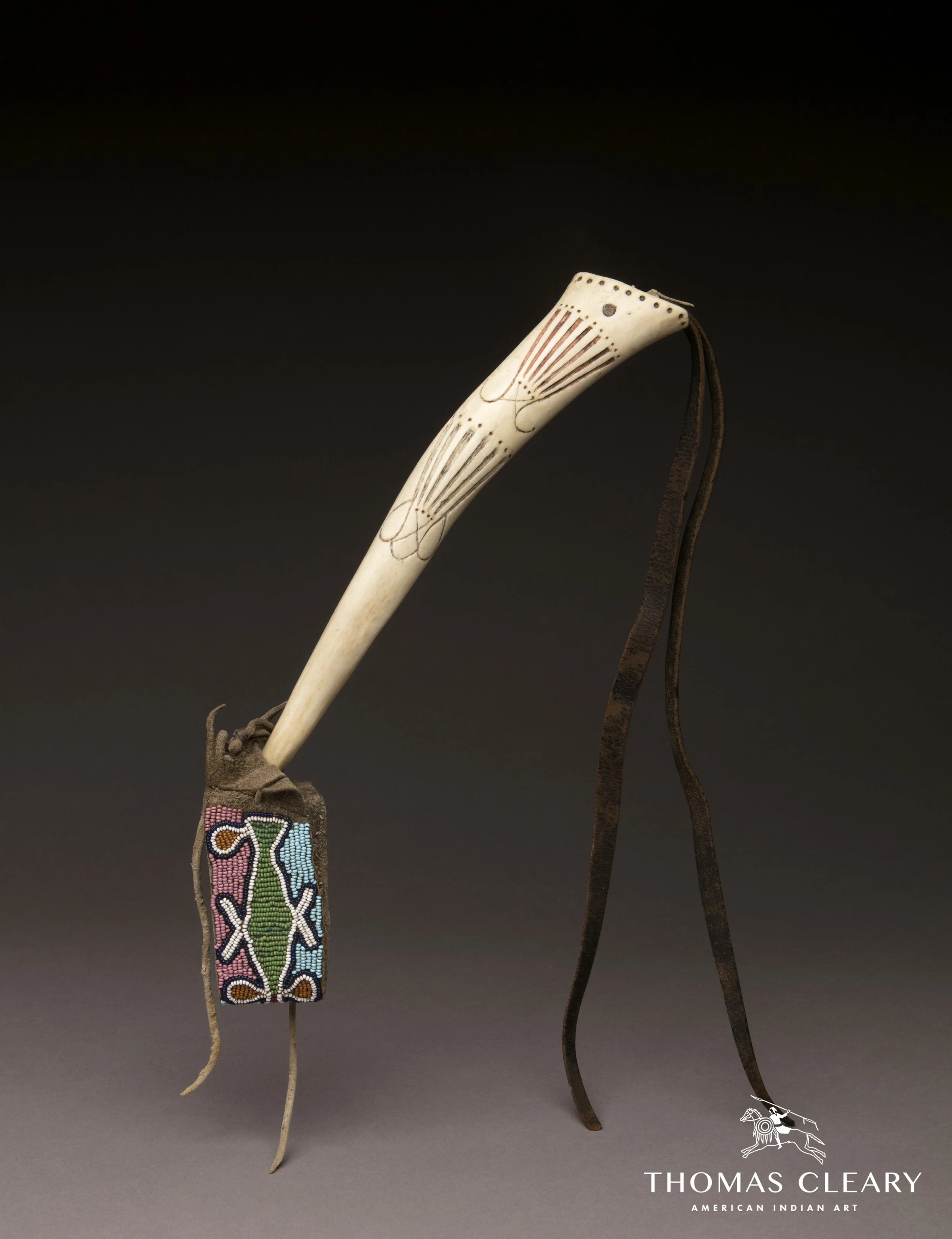
Eastern Plains, possibly Meskwaki Quirt, 1860

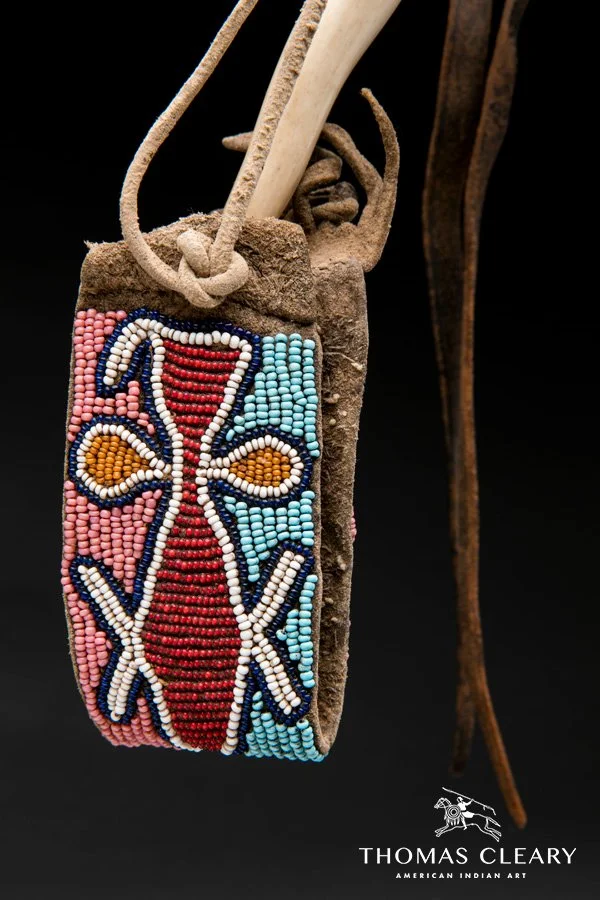
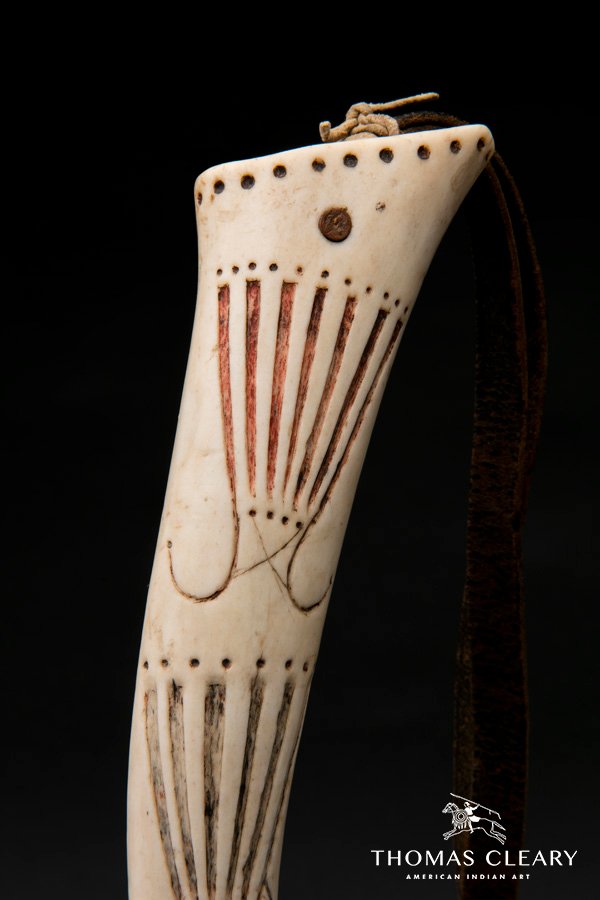
A carved elk antler which has been incised and painted with abstracted eagle tail fans, or headdress motifs. The accompanying strap, made of buffalo, is beaded with seed and pony beads.

Quirts played a central role in the warrior complex of the Indigenous American West, particularly on the Prairie. Beyond their immediate function on horseback, they served a variety of purposes. Warriors used them as weapons in combat and as instruments of discipline within camps and warrior societies. During the Reservation Period (1880–1920), quirts also became important heirlooms, allowing a younger generation of confined warriors to inherit their families’ war honors and establish social standing.

Most significantly, quirts were instruments through which warriors counted coup — the act of charging and merely touching an enemy rather than killing him. This gesture demonstrated superior courage and restraint; it was widely regarded as one of the highest expressions of bravery on the battlefield. The quirt afforded a warrior additional reach on horseback or foot, and consequently became a vital tool in a warrior’s arsenal for social advancement.

Carved prairie elk antler quirts are a rare object form, celebrated for the elegance and precision carving. Some notable examples can be found in the Metropolitan Museum in New York; the Detroit Institute or Arts in Detroit; and the Eiteljorg Museum of American Indians and Western Art in Indianapolis.

14" long (quirt); 4.5" long and 2.25" wide (strap); 17.5" long (lash); accompanied by a custom stand.

Published: Thomas Cleary LLC Summer 2018 exh. cat (Summer 2028), p.6

#51216
Eastern Plains, possibly Meskwaki Quirt, 1860

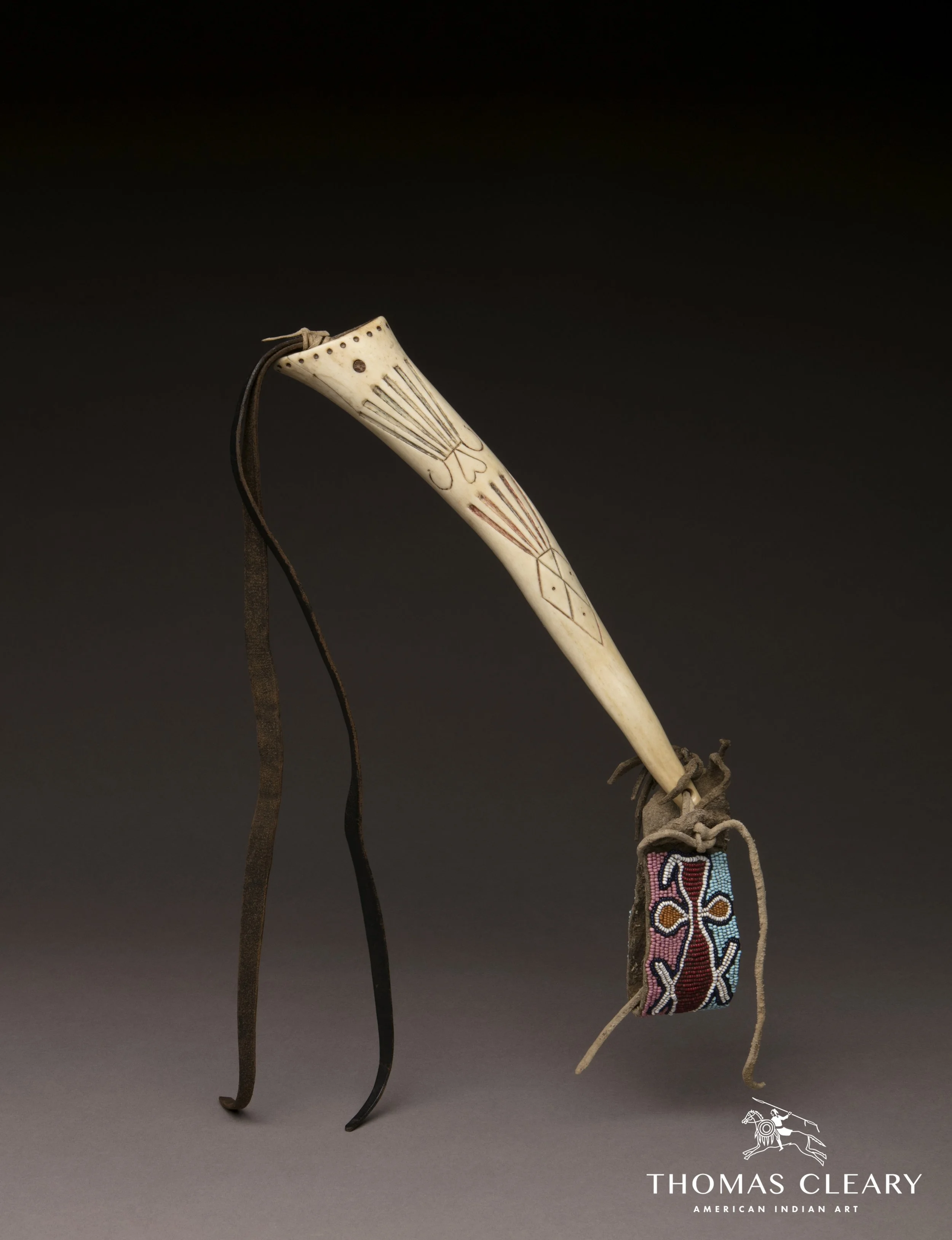
A carved elk antler which has been incised and painted with abstracted eagle tail fans, or headdress motifs. The accompanying strap, made of buffalo, is beaded with seed and pony beads.

Quirts played a central role in the warrior complex of the Indigenous American West, particularly on the Prairie. Beyond their immediate function on horseback, they served a variety of purposes. Warriors used them as weapons in combat and as instruments of discipline within camps and warrior societies. During the Reservation Period (1880–1920), quirts also became important heirlooms, allowing a younger generation of confined warriors to inherit their families’ war honors and establish social standing.

Most significantly, quirts were instruments through which warriors counted coup — the act of charging and merely touching an enemy rather than killing him. This gesture demonstrated superior courage and restraint; it was widely regarded as one of the highest expressions of bravery on the battlefield. The quirt afforded a warrior additional reach on horseback or foot, and consequently became a vital tool in a warrior’s arsenal for social advancement.

Carved prairie elk antler quirts are a rare object form, celebrated for the elegance and precision carving. Some notable examples can be found in the Metropolitan Museum in New York; the Detroit Institute or Arts in Detroit; and the Eiteljorg Museum of American Indians and Western Art in Indianapolis.

14" long (quirt); 4.5" long and 2.25" wide (strap); 17.5" long (lash); accompanied by a custom stand.

Published: Thomas Cleary LLC Summer 2018 exh. cat (Summer 2028), p.6

#51216
TomCleary_LogoIconBW.jpg

Powered by Squarespace